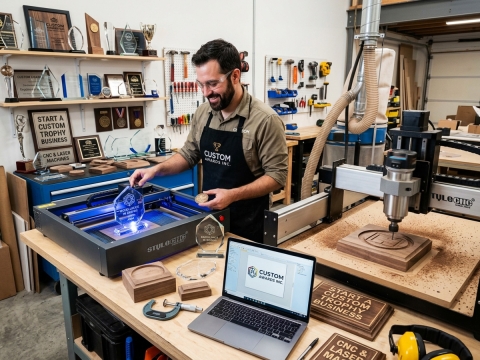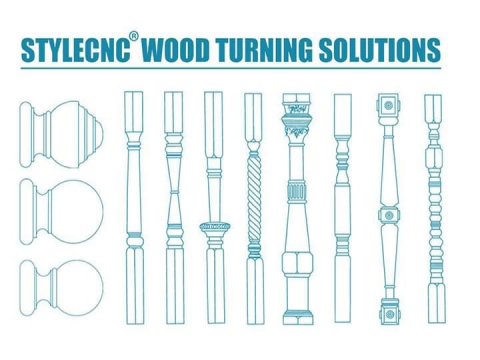
Investir dans une machine CNC est l'une des décisions les plus importantes qu'un petit entrepreneur puisse prendre. Que vous gériez un atelier de menuiserie, un atelier de métallurgie ou une activité artisanale à domicile, la technologie de commande numérique par ordinateur (CNC) permet de transformer des matières premières en produits de précision avec une rapidité et une régularité inégalées par les outils manuels. Le marché mondial des machines CNC est évalué à plus de [montant manquant]. $1Ce marché, qui s'élève à 00 milliards de dollars, devrait presque doubler d'ici 2032, porté par la demande d'automatisation dans les secteurs de l'automobile, de l'aérospatiale, du médical et des biens de consommation. Cette croissance reflète une tendance plus large : les entreprises de toutes tailles adoptent les commandes numériques pour rester compétitives.
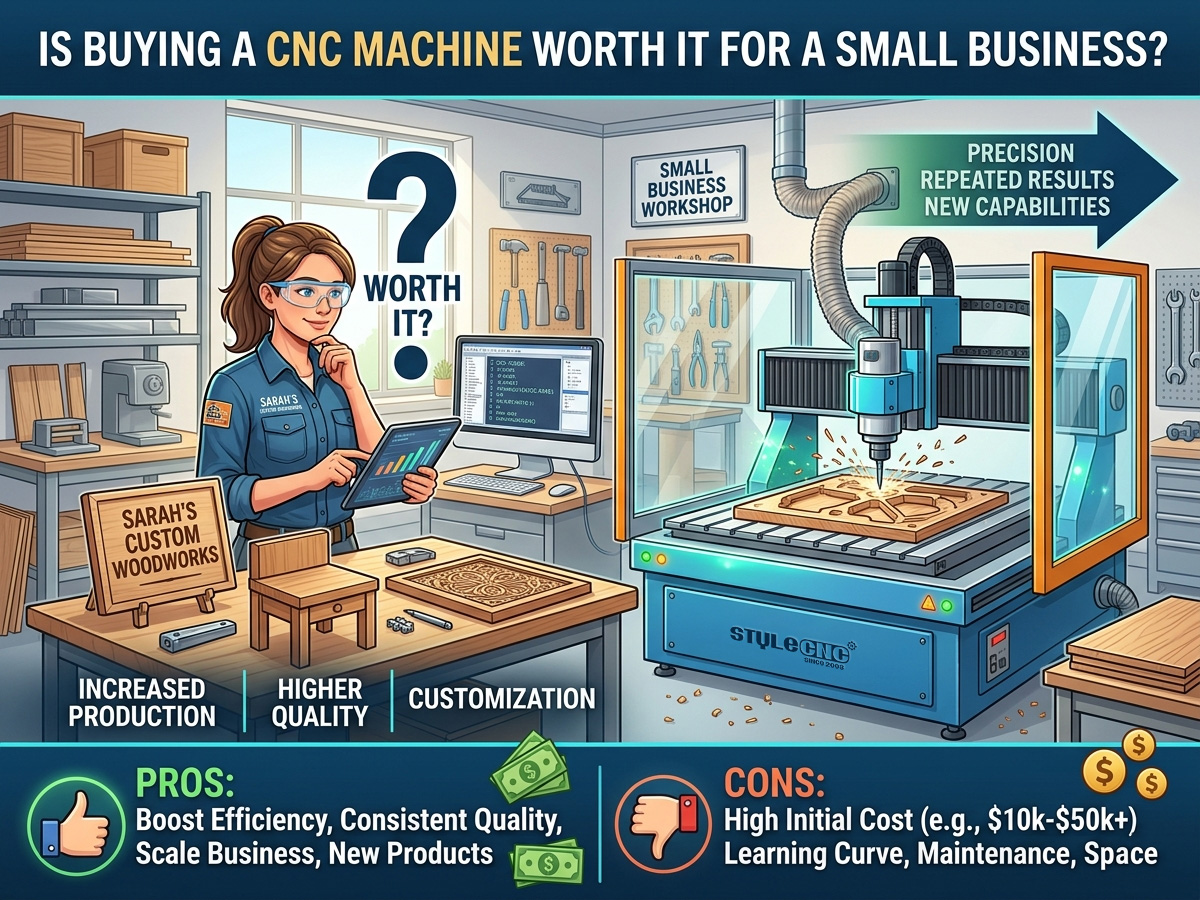
Mais la question demeure pratique : une machine CNC représente-t-elle un bon investissement dans votre situation ? Ce guide détaille les coûts réels, le potentiel de profit, les indicateurs de revenus et les considérations stratégiques afin de vous permettre de prendre une décision éclairée avant d’investir.
Que fait concrètement une machine CNC pour une petite entreprise ?
Une machine à commande numérique (CNC) lit les fichiers de conception numériques et les traduit en découpes, gravures ou soudures physiques précises sur des matériaux comme le bois, le métal, l'acrylique, la pierre et le plastique. Pour une petite entreprise, cela signifie qu'il est possible de produire tout type de produit, des éléments de mobilier sur mesure et de la signalétique aux pièces industrielles et aux cadeaux personnalisés, le tout avec une précision constante et une intervention manuelle minimale.
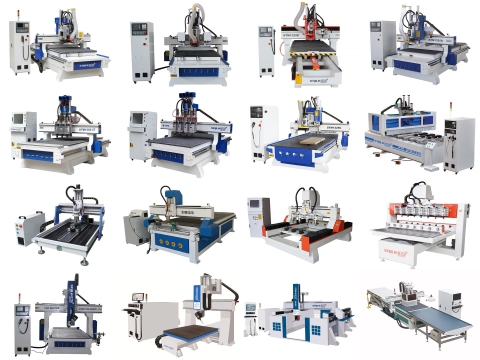
Les avantages pratiques pour les petites structures incluent la constance des lots (chaque pièce correspond au fichier numérique), le prototypage rapide pour les nouvelles idées de produits et la possibilité de répondre aux commandes personnalisées sans avoir à embaucher de main-d'œuvre spécialisée pour chaque tâche. Routeur CNC pour petites entreprises peut gérer la fabrication d'enseignes, les composants d'ébénisterie, 3D sculptures et panneaux décoratifs, remplaçant ainsi efficacement 3 ou 4 processus manuels.
Combien coûte le lancement d'une entreprise de machines CNC ?
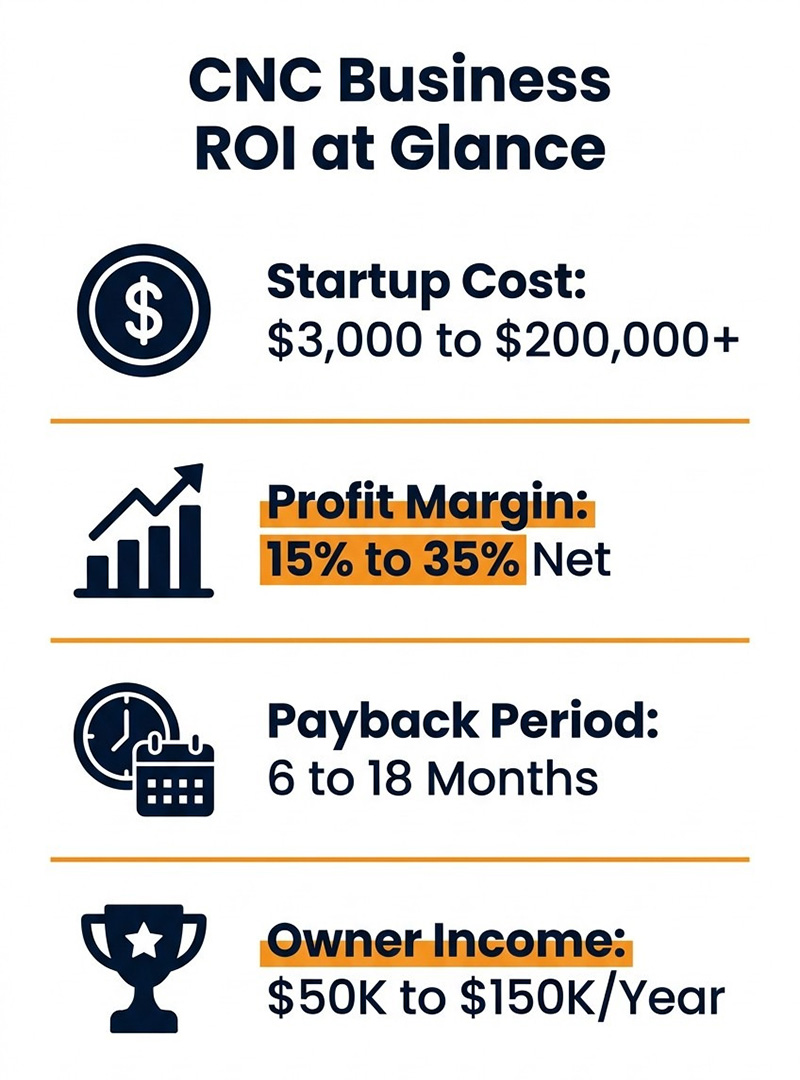
Les coûts de démarrage varient considérablement selon le type d'équipement CNC, les besoins en espace de travail et l'envergure des opérations envisagées. Voici une estimation réaliste des coûts pour les solutions d'entrée de gamme courantes :
| Type d'entreprise | Coût de l'équipement | Démarrage total | Idéal pour |
|---|---|---|---|
| Machine CNC de loisir à domicile | $2,000 - $8,000 | $3,000 - $12,000 | Vendeurs Etsy, artisans, activités complémentaires |
| Petit Atelier | $8,000 - $30,000 | $15,000 - $50,000 | Enseignes personnalisées, meubles, pièces en petites séries |
| Atelier d'usinage professionnel | $ 30,000 - $100,000 | $ 60,000 - $200,000 | fabrication sous contrat, pièces industrielles |
| Atelier de découpe laser | $3,000 - $50,000 | $6,000 - $70,000 | Services de gravure, de découpe et de marquage |
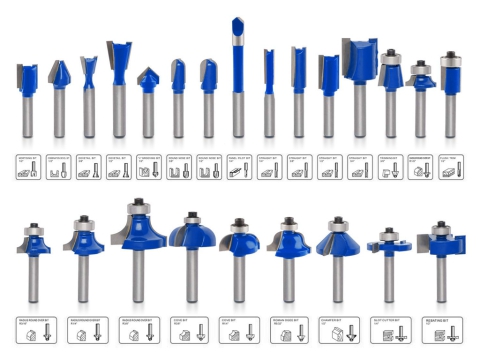
Les coûts de démarrage totaux comprennent non seulement la machine elle-même, mais aussi les licences logicielles (logiciels de CAO/FAO), l'outillage et les forets, le dépoussiérage ou l'extraction des fumées, les modifications de l'espace de travail et les matières premières initiales. Pour une analyse détaillée des prix, consultez le document complet. Guide des prix des routeurs CNC comparer les modèles selon les niveaux de budget.
Une entreprise de machines à commande numérique (CNC) est-elle rentable ? Données réelles sur les revenus ?
En résumé, oui, mais la rentabilité dépend de votre créneau, de votre politique tarifaire et de l'efficacité de la maintenance de votre machine. Les données du secteur montrent que les opérations CNC bien gérées atteignent les objectifs suivants :
| Métrique | Petit magasin/magasin à domicile | Boutique professionnelle |
|---|---|---|
| Revenu annuel (par machine) | $30,000 - $80,000 | $150,000 - $400,000 |
| Marge brute | 20% - 40% | 20% - 50% |
| La marge bénéficiaire nette | 10% - 25% | 15% - 35% |
| Période de récupération typique | 6 - Mois 18 | années 2 - 5 |
| Revenu annuel du propriétaire | $30,000 - $70,000 | $ 50,000 - $150,000 |
Les propriétaires d'ateliers d'usinage CNC aux États-Unis gagnent entre $50,000 et $150 000 par an, selon la taille de l’atelier, sa situation géographique, sa spécialisation et son niveau d’automatisation. Les opérateurs des secteurs de l’aérospatiale et des dispositifs médicaux affichent systématiquement les marges les plus élevées, car ces secteurs exigent des tolérances très strictes et une documentation rigoureuse, créant ainsi des barrières naturelles à la concurrence par les prix bas.
Pour ceux qui se demandent si un routeur justifie spécifiquement l'investissement, ceci analyse du retour sur investissement des routeurs CNC couvre en détail le calcul du seuil de rentabilité.
Projets CNC les plus rentables pour les petites entreprises
Tous les travaux d'usinage CNC ne génèrent pas des rendements équivalents. Les projets les plus rentables associent une forte valeur perçue, un faible coût des matériaux et une forte demande du marché. D'après les données de vente actuelles de plateformes comme Etsy, Amazon Handmade et des canaux B2B directs, les catégories suivantes offrent systématiquement les meilleures marges :
| Catégorie de projet | Prix de vente moyen | Coût matériel | Marge bénéficiaire |
|---|---|---|---|
| Panneaux en bois personnalisés | $50 - $300 | $5 - $30 | 60% - 80% |
| Planches à découper personnalisées | $40 - $120 | $8 - $20 | 55% - 75% |
| Pièces de meubles sur mesure | $ 200 - $2, 000 + | $40 - $400 | 40% - 60% |
| Pièces de fabrication en métal | $ 100 - $5, 000 + | $20 - $1,000 | 30% - 50% |
| Cadeaux gravés au laser | $15 - $80 | $2 - $10 | 70% - 85% |
| 3D Sculptures et art en relief | $100 - $500 | $10 - $50 | 65% - 80% |
Les entrepreneurs qui explorent des sources de revenus basées sur les lasers peuvent consulter les Guide complet pour créer une entreprise de découpe laser pour la sélection des équipements, les stratégies de tarification et les cadres d'acquisition de clients.
Facteurs clés déterminant le retour sur investissement des machines CNC
Plusieurs variables déterminent directement si votre machine CNC deviendra un centre de profit ou un actif déprécié qui prend la poussière. Il est essentiel de comprendre ces facteurs avant d'acheter :
Taux d'utilisation des machines
Le principal facteur prédictif de rentabilité. Les ateliers qui maintiennent leurs machines CNC en état de marche. 40+ Le seuil de rentabilité est atteint plus rapidement en fonction du nombre d'heures hebdomadaires. Objectif : au moins 50% atteindre 65 % d'utilisation des heures machine disponibles pour couvrir les frais généraux et générer des bénéfices.
Sélection de créneaux
Les ateliers de fabrication de produits standardisés se font concurrence presque exclusivement sur les prix. Les entreprises spécialisées, qu'il s'agisse de composants aérospatiaux, de meubles sur mesure, de menuiserie architecturale ou de produits de consommation personnalisés, pratiquent des prix plus élevés et font face à une concurrence moins forte.
Stratégie de prix
La sous-évaluation des prix est la principale cause d'échec des nouvelles entreprises d'usinage CNC. Votre tarif doit couvrir l'amortissement des machines, l'usure des outils, les pertes de matériaux, le temps de réglage, le temps de conception, les frais généraux et une marge bénéficiaire saine. Le tarif d'un atelier d'usinage CNC classique se situe entre : $50 et $120 dollars de l'heure pour la conception et l'usinage combinés.
Approvisionnement en matériaux et gestion des déchets
L’achat de matières premières en gros, l’imbrication efficace des pièces dans votre logiciel de FAO et la réutilisation des chutes de tissu dans des produits plus petits contribuent tous à l’amélioration des marges au fil du temps.
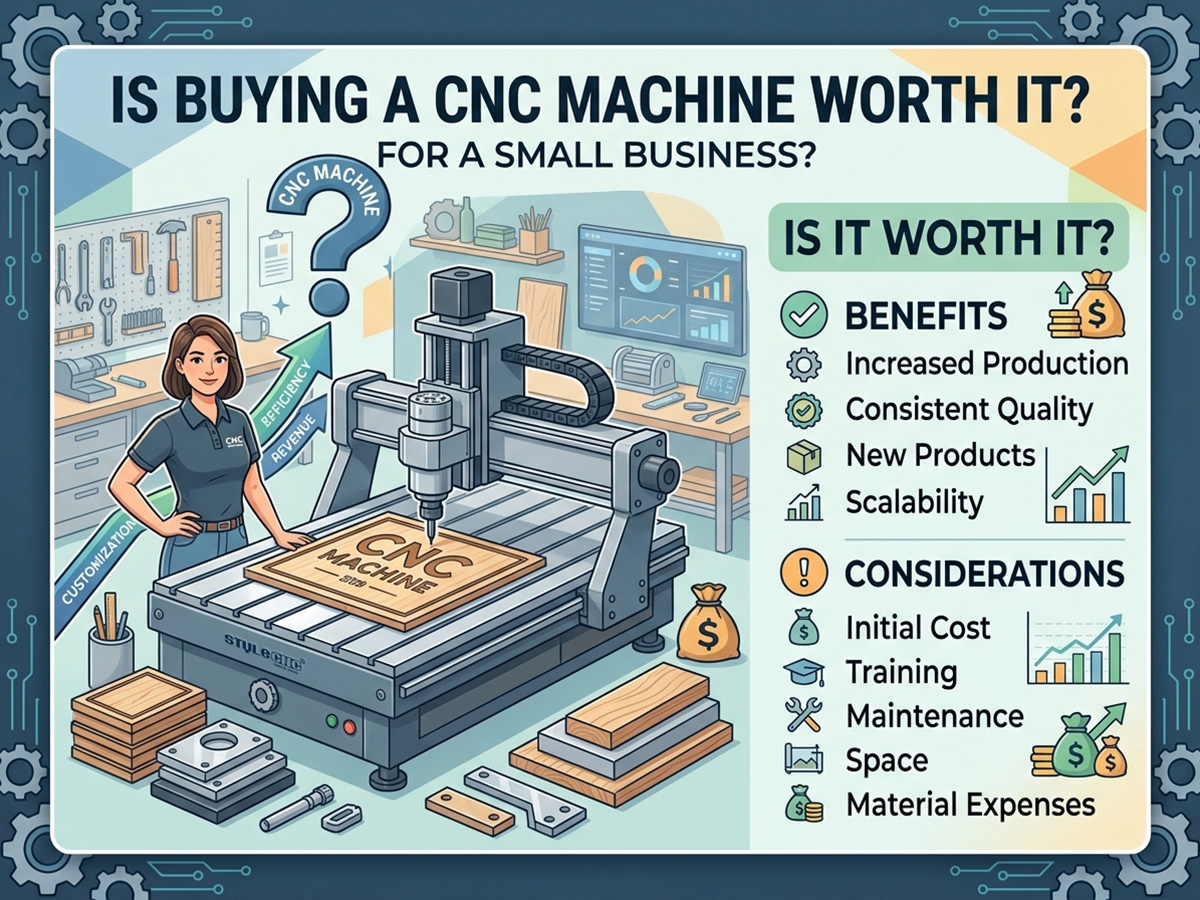
Types de machines CNC : Choisir celle qui convient le mieux à votre entreprise
Choisir le bon équipement CNC est essentiel à la réussite de vos opérations. Chaque type de machine est adapté à des matériaux, des secteurs et des gammes de prix différents.
| Type de machine | Prix | Meilleurs matériaux | Applications idéales |
|---|---|---|---|
| Routeur CNC | $2,000 - $80,000 | Bois, MDF, acrylique, mousse, métaux tendres | Meubles, enseignes, armoires, 3D des sculptures |
| Laser Engraver | $300 - $30,000 | Bois, cuir, verre, acrylique, métal revêtu | Personnalisation, cadeaux, image de marque, prototypes |
| Fiber Cutter Laser | $ 15,000 - $300,000 | Acier, aluminium, cuivre, laiton, titane | Pièces en tôle, fabrication industrielle |
| Plasma Cutter | $5,000 - $60,000 | Acier doux, acier inoxydable, aluminium (épais) | Art métallique, pièces de structure, agriculture/ranch |
| Fraiseuse CNC | $ 8,000 - $150,000 | Métaux, plastiques techniques | Pièces de précision, prototypage, outillage |
Les primo-accédants devraient commencer par le Guide d'achat complet pour routeurs CNC afin de comprendre la rigidité du châssis, la puissance de la broche, les systèmes de contrôle et la compatibilité logicielle avant de comparer des modèles spécifiques.
Guide étape par étape : Comment créer une petite entreprise de machines CNC
Lancer une entreprise d'usinage CNC nécessite une approche structurée. Suivez ces étapes pour minimiser les risques et accélérer votre retour à la rentabilité :
Étape 1. Étudiez votre marché local. Identifiez les secteurs d'activité proches de chez vous qui ont besoin de services d'usinage CNC. Les entreprises de signalétique, les ateliers d'ébénisterie, les entreprises de métallurgie et les organisateurs d'événements sont des clients potentiels pour la première fois.
Étape 2. Choisissez un créneau avant de choisir une machine. Votre marché cible détermine le type de machine, la taille du plateau, la puissance de la broche et le logiciel dont vous avez besoin.
Étape 3. Calculez le coût total de possession. Prenez en compte l'outillage, les logiciels, les matériaux, la maintenance, le dépoussiérage, l'énergie et le loyer de l'espace de travail, en plus du prix de la machine. Consultez le Analyse des coûts des machines à bois CNC pour des chiffres détaillés.
Étape 4. Constituez un portfolio avant le lancement. Créez 10 à 15 produits d'exemple qui mettent en valeur les capacités de votre machine. Photographiez-les de manière professionnelle pour votre site web et vos réseaux sociaux.
Étape 5. Fixez des prix rentables dès le premier jour. Calculez le tarif de votre atelier en divisant tous les frais généraux mensuels par les heures de production disponibles, puis en ajoutant votre marge cible.
Étape 6. Investissez dans le marketing et la présence numérique. Un site web professionnel, le référencement local, un profil Google My Business et une présence sur des plateformes comme Etsy ou Amazon Handmade génèrent les premières commandes.
Étape 7. Automatiser la production. À mesure que le volume augmente, ajoutez des changeurs d'outils automatiques, des flux de traitement par lots et des logiciels d'imbrication pour accroître le débit sans augmenter proportionnellement la main-d'œuvre.
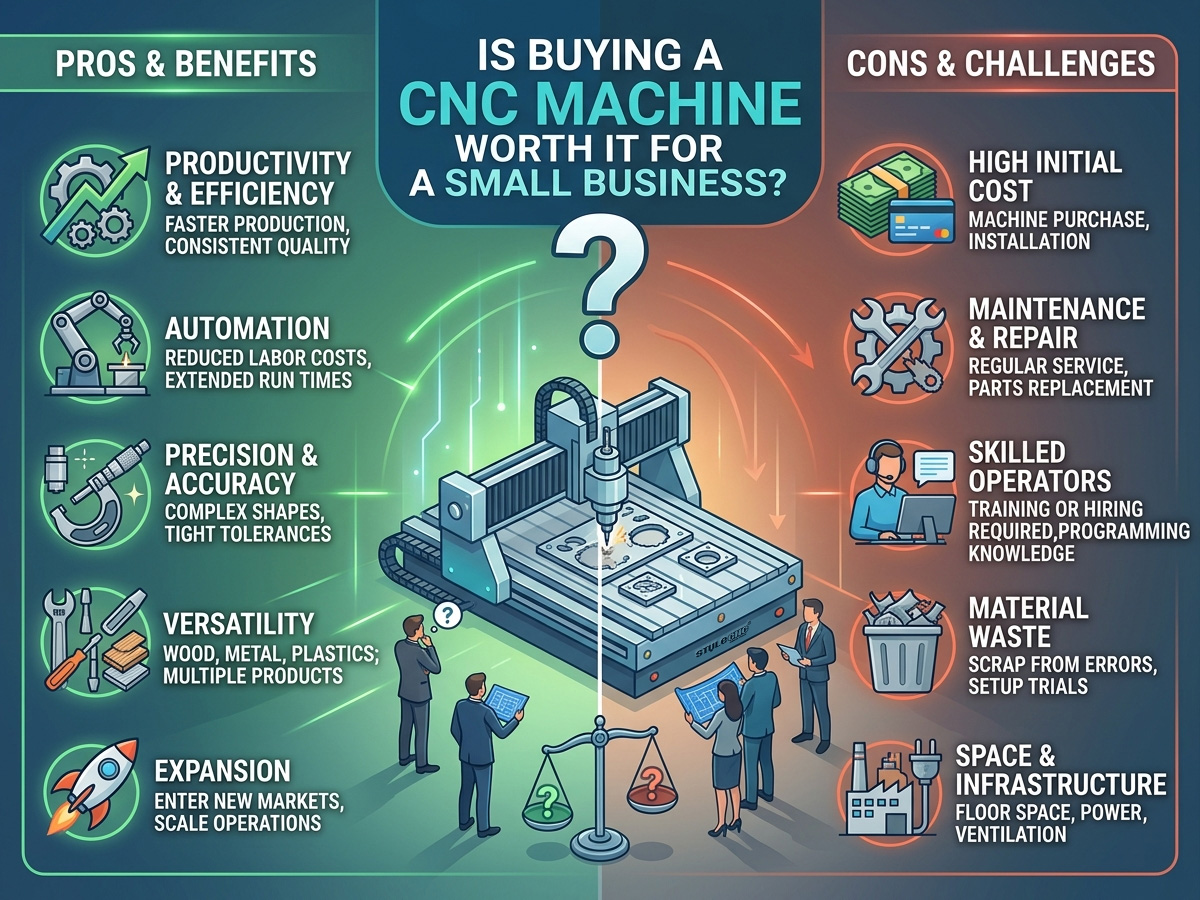
Avantages et inconvénients de l'achat d'une machine CNC pour une petite entreprise
| ✔ Avantages | ✘ Défis |
|---|---|
| • Produit des pièces identiques avec une précision submillimétrique à chaque série | • Un investissement initial important pour des équipements de qualité |
| • Réduit la dépendance à la main-d'œuvre et accélère la production de 3 à 10 fois par rapport au travail manuel | • Courbe d'apprentissage pour le logiciel CAO/FAO et le fonctionnement de la machine |
| • Permet de proposer des produits personnalisés à des prix premium | • Coûts récurrents liés à l'outillage, à la maintenance et aux matériaux |
| • Les machines peuvent fonctionner sans surveillance avec une configuration et des mesures de sécurité appropriées. | • Nécessite un espace de travail dédié avec alimentation électrique et ventilation. |
| • Ouvre l'accès aux revenus de la fabrication sous contrat B2B | • Une étude de marché est nécessaire pour éviter la saturation des niches de produits. |
Quand l'achat d'une machine CNC est-il (et n'est-il pas) judicieux ?
Investir dans une machine CNC est financièrement judicieux lorsque :
✔ Vous avez déjà une idée de produit ou une clientèle qui exige une fabrication de précision
✔ Vous dépensez plus de $500/mois sous-traitance de travaux CNC à des ateliers tiers
✔ Vos méthodes de production manuelles actuelles créent des goulots d'étranglement qui limitent la croissance des revenus
✔ Vous pouvez raisonnablement consacrer plus de 20 heures par semaine au fonctionnement de la machine.
✔ Vous êtes prêt(e) à investir 3 à 6 mois dans l'apprentissage de la CAO/FAO et du fonctionnement des machines.
Envisagez de reporter l'achat si :
• Vous n'avez pas encore identifié de marché ni de clientèle clairement définis.
• Votre volume de production mensuel prévu immobiliserait la machine. 80%+ du temps.
• Votre budget disponible ne couvre que la machine, mais pas l'outillage, les logiciels et les matériaux.
Perspectives du marché des machines CNC : Pourquoi investir maintenant ?
Le marché mondial des machines CNC connaît une croissance soutenue, portée par l'automatisation de la production, les initiatives de relocalisation et l'expansion des secteurs des véhicules électriques, de l'aérospatiale et des dispositifs médicaux. Les analystes du secteur prévoient une croissance du marché d'environ $101 milliard en 2025 à plus de $195 milliards d'ici 2032, ce qui reflète un taux de croissance annuel composé proche de 10%L’Amérique du Nord s’impose comme la région à la croissance la plus rapide, grâce aux incitations à la production nationale et à l’adoption des usines intelligentes.
Pour les petites entreprises, cette tendance de fond se traduit par une demande locale croissante de pièces de précision, de services de prototypage et de fabrication sur mesure. Celles qui se dotent de capacités d'usinage CNC se positionnent dès maintenant pour capter des commandes, à mesure que les chaînes d'approvisionnement se localisent et que les grands fabricants recherchent des partenaires de petite taille et fiables pour gérer les surplus de production et les petites séries spécialisées.
Verdict final : Faut-il acheter une machine CNC ?
L'acquisition d'une machine CNC représente l'un des investissements les plus rentables pour une PME, à condition d'adopter une approche axée sur le marché, des prévisions de coûts réalistes et un engagement à maîtriser la technologie. Les données confirment un excellent retour sur investissement : un délai de récupération typique de 6 à 18 mois pour les petits ateliers, des marges bénéficiaires nettes de 15 % à 35 % pour les entreprises bien gérées et une demande croissante sur le marché dans la quasi-totalité des secteurs manufacturiers.
Commencez par définir votre créneau, calculer votre coût total de possession et constituer un petit catalogue de produits d'exemple. Choisissez ensuite une machine adaptée à vos besoins de production et à votre budget. Grâce à une politique tarifaire rigoureuse et un marketing constant, une entreprise spécialisée dans l'usinage CNC peut vous assurer une indépendance financière et un épanouissement créatif pour de nombreuses années.
Prêt à choisir votre première machine CNC ? Découvrez l’ensemble de la gamme. STYLECNC catalogue produits Comparez les routeurs, les lasers, les découpeuses plasma et les fraiseuses avec une consultation d'experts gratuite et une livraison dans le monde entier.